Your blood pressure is a measure of the pressure in your arteries as your heart pumps blood around your body. It naturally changes throughout the day, depending on your emotional state and physical activity levels, but when it stays consistently too high over time it is known as high blood pressure or ‘hypertension’, which literally means ‘over pressure’.
High blood pressure accounts for 20-25% of all deaths worldwide and affects approximately one in three people worldwide. That’s over 16 Million people in the UK, and 50 million people in the USA. Unfortunately, in 90% of cases of high blood pressure (the ‘Primary’ or ‘Essential’ Hypertension cases), doctors are unable to find a physical cause – and that’s where the Hypnotension™ programme can help.
About your blood pressure reading
A certain amount of pressure is need to pump the blood around your body. The pressure is highest as the heart pumps blood into the arteries, and lowest when the heart is resting in-between beats.
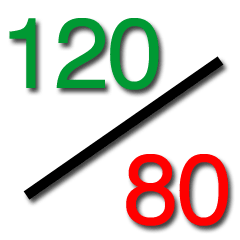
Blood pressure is measured in millimetres of mercury (mmHg) and is written as two numbers, for example, 120/80 mmHg. This is said as ‘120 over 80’.
The top (first) number is the systolic blood pressure. This is the pressure in the arteries when the heart beats and forces blood around the body.
The bottom (second) number is the diastolic blood pressure. This is the pressure in the arteries when the heart is resting in between beats.
A typical normal blood pressure reading is around 115/75 mmHg, and high blood pressure is defined as a reading of 140/90 or higher over a period of several weeks. Remember that many things can affect your blood pressure reading, so one high reading does not necessarily mean high blood pressure.
A blood pressure of 160/100 mmHg or above carries a significant risk to health and generally requires medication to lower it. However, there are other factors that may be taken into account and medication can vary from one person to another.
In addition, high blood pressure can be:
- Just a high systolic blood pressure, e.g. 160/70 mmHg.
- Just a high diastolic blood pressure, e.g. 120/100 mmHg.
- Or both, e.g. 160/100 mmHg.
Doctors generally recommend that blood pressure is kept below 120/80, and ideally around 115/75.
High Blood Pressure Causes
There are many physical, emotional and lifestyle factors which affect blood pressure. The most common risk factors which can cause high blood pressure are:
• The health of your heart, arteries and kidneys
Around 5-10% of cases of high blood pressure are caused by an underlying medical condition, such as diabetes, kidney disease or a hormonal disorder. High blood pressure caused by identifiable diseases are known as Secondary Hypertension and, although rare, they require medical treatment – which is why your Hypnotension Practitioner will only work with you in conjunction with the primary medical care of your GP.
Secondary hypertension can also be caused by a reaction to various household medications. Here are 5 hidden high blood pressure dangers in the home.
• Your emotional ‘stress’ levels
Whenever we feel threatened, the survival response kicks in and our bodies flood with stress hormones which get us ready to ‘fight’ or ‘flee’ from the threat.
Unfortunately, the stresses of modern living can’t easily be fought or escaped. This tends to leave us in a constant state of emotional ‘red alert’ – and ongoing high levels of stress hormones causes high blood pressure.
Studies on working men and women in the USA, for example, found that those with most responsibility for running the home had significantly higher blood pressure than those who left it to their partner.
Stress can be caused by many things, and not everyone reacts to the same triggers, so it’s important to discover your own triggers and take steps to reduce them.
That’s often easier said than done, however, so our network of Certified Hypnotension Practitioners are standing by if you need any help.
• How much salt you eat
Salt is essential for the health of our bodies. Unfortunately, most of us eat so much that it puts us at risk of stroke, high blood pressure, and heart disease. That’s because salt causes the bloodstream to hold more water than necessary, increasing the volume and pressure of blood, which puts excessive strain on your body.
Generally a measurable risk is seen when we consume more than 2g of salt per day. Compare that to the current UK guideline of 6g salt per day!
Your Certified Hypnotension Practitioner can help you identify areas where salt and other food factors may be causing high blood pressure.
• How much exercise you do
Exercise not only helps maintain healthy blood vessels for good circulation in the body and brain, it also eats up blood sugars, lowering the risk of diabetes.
Most importantly, exercise can mop up and decrease the amount of ‘stress hormones’ in the body. Your Certified Hypnotension Practitioner can help you make changes in your routines which will help you exercise more without even realising your are doing it.
• How much alcohol you drink
Many people use alcohol as a way to relax and unwind, but it has a strong effect on blood pressure, and studies have found high blood pressure reduces by around 1 mm for each unit-per-day decrease in alcohol consumption.
Your Certified Hypnotension Practitioner can help you find ways to deal with the stresses of life in ways that are healthier, so that you can enjoy your evening tipple without overdoing it.
• How overweight you are
Over two thirds of men and over half of women in the UK and USA are overweight or obese, which means a body mass index over 25. Weight has a significant effect on high blood pressure. Studies show that for every Kg (2.2lbs) extra weight we carry, our blood pressure is around 1mmHg higher.
Your Certified Hypnotension Practitioner can help you lose weight in a controlled manner, and avoid emotional and stress related eating.
Reduce your High Blood Pressure
As you can see, the Hypnotension™ programme effectively targets 5 out of the 6 main risk factors which cause high blood pressure. It is known that if you reduce these risk factors that it is highly likely that you will not only reduce your high blood pressure but also improve your overall health dramatically.
Want to find out more? Download our free report.